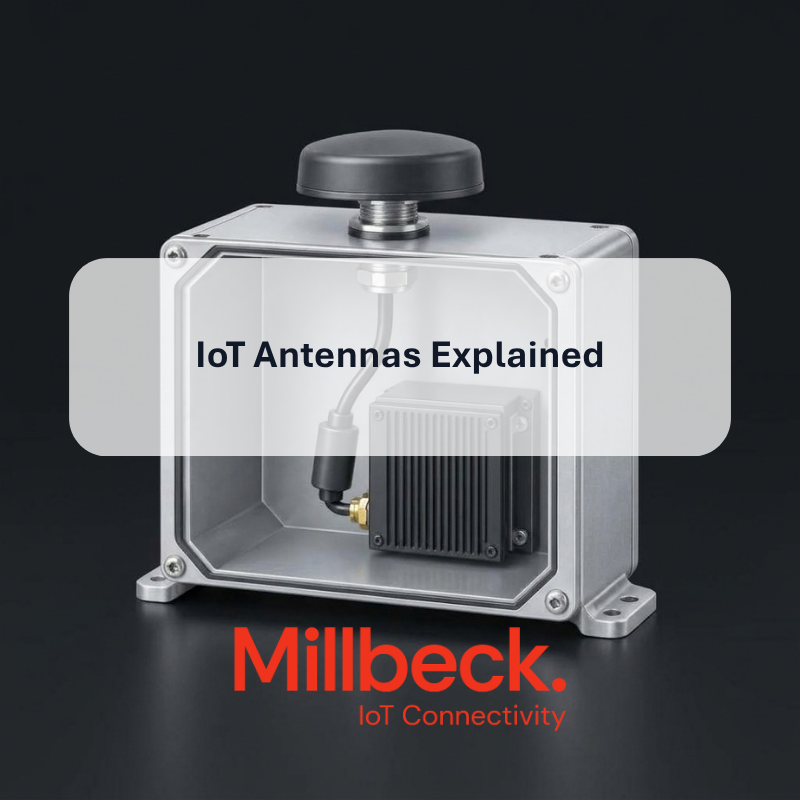
5G Fixed Wireless Access (FWA) For Business Connectivity
When fibre-to-the-premises (FTTP) is delayed, unavailable, or commercially hard to justify, Fixed Wireless Access (FWA) can provide a practical alternative. It delivers internet access over 4G and 5G, with install times measured in days rather than months, provided the local cellular signal is suitable.
Millbeck delivers FWA as a connectivity solution, not just a piece of hardware. We combine an IoT SIM, the right cellular router or gateway, and an antenna design that matches the site. You get a broadband-class connection that is supportable, measurable, and sized for the way your organisation works.
When FWA Is The Right Fit
FWA works well when you need reliable connectivity quickly, or when a site is likely to move or change. Typical use cases include:
- New premises awaiting fibre installation
- Pop-up and temporary sites (construction compounds, events, project offices)
- Depots, warehouses, and remote locations where fibre quotes are high
- Secondary links for resilience, where fixed-line diversity is limited
FWA is not a universal replacement for fibre. Performance depends on local coverage, cell loading at peak times, the radio environment around the building, and the quality of the installation. We will tell you early if the risk is too high, and what to do next.
Choosing The Right Hardware Architecture
Most FWA deployments fall into one of two designs. The right choice depends on where the best signal is and how far that is from your network equipment.
Indoor Router With External Antennas
An indoor cellular router is often the simplest approach when you can mount antennas with short cable runs and maintain good signal conditions. This design is common in small to mid-sized offices and sites where the comms area is close to an external wall or roof access.
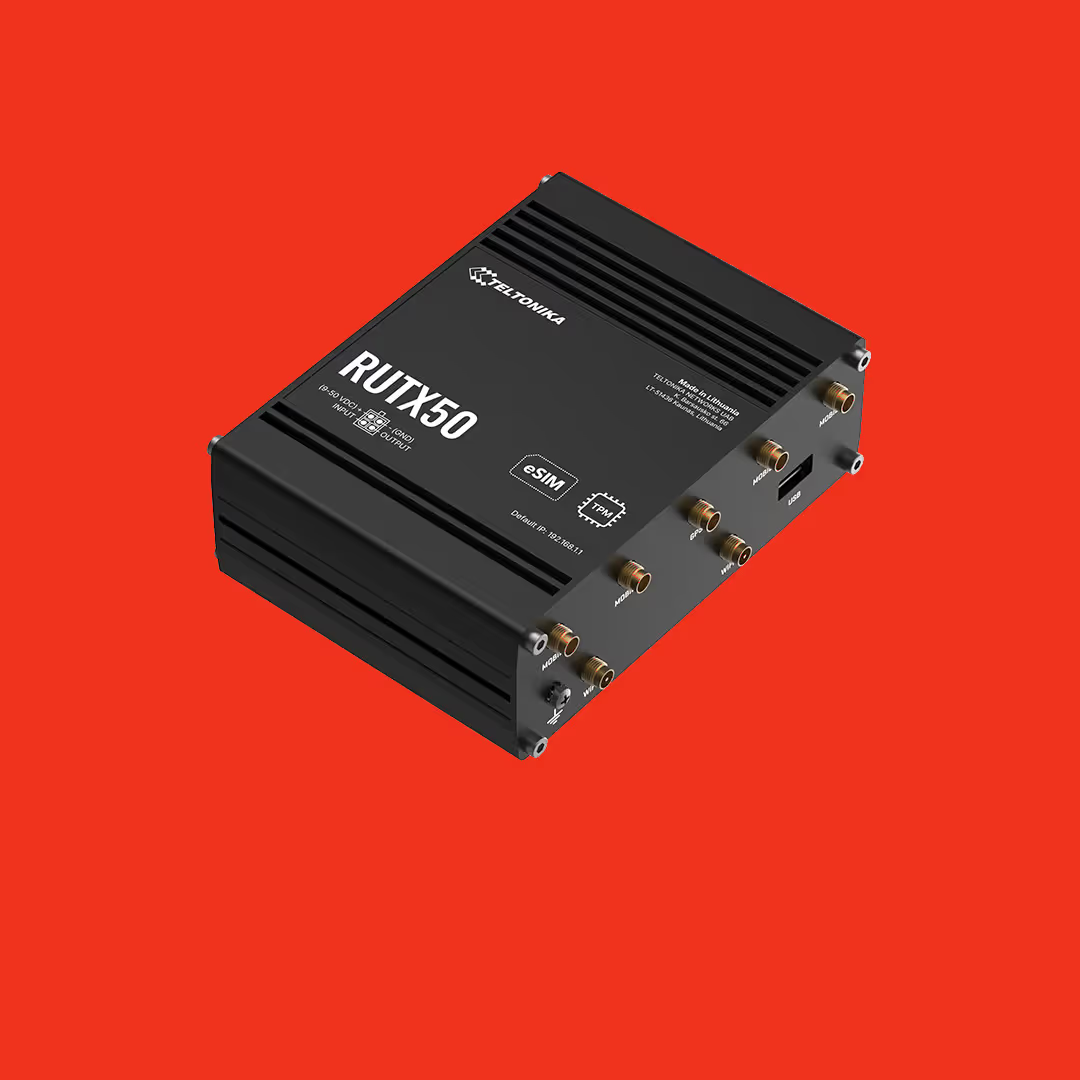
Millbeck supplies Teltonika cellular routers commonly used for FWA deployments, including the RUTC50. We specify the router around your real requirements, such as Ethernet port count, failover design, VPN needs, and remote access expectations.
Compact Gateways For Integration
Where you need cellular connectivity embedded into an existing network design, a compact gateway can be the better fit. This is common for integrators, managed service providers, and sites with a defined firewall and routing stack.
Millbeck supplies Teltonika gateways used for these deployments, including the TRB501. The right choice comes down to how you want to handle routing, security, and management across the wider estate.
Antennas: The Difference Between ‘It Works’ And ‘It’s Stable’
FWA performance is driven by the signal path. A strong installation is not about one speed test, it is about consistent performance during working hours.
A proper design typically covers:
- Antenna type selection (directional or omni-directional), based on mast location and local RF conditions
- Correct MIMO installation (orientation, spacing, and mounting)
- Mounting position to reduce building attenuation and local obstruction effects
- RF cable selection and length control, especially at higher frequencies
Millbeck supplies and specifies antenna options for fixed installations, including directional antennas where a targeted link is required. We focus on measurable signal quality and stability, not marketing metrics.
Outdoor Gateways: Avoiding Long Coax Runs
In many buildings, the best cellular signal is found outside and high up, while the network equipment sits deep indoors. Long coaxial runs can introduce avoidable RF loss and reduce link quality, particularly at higher frequency bands.
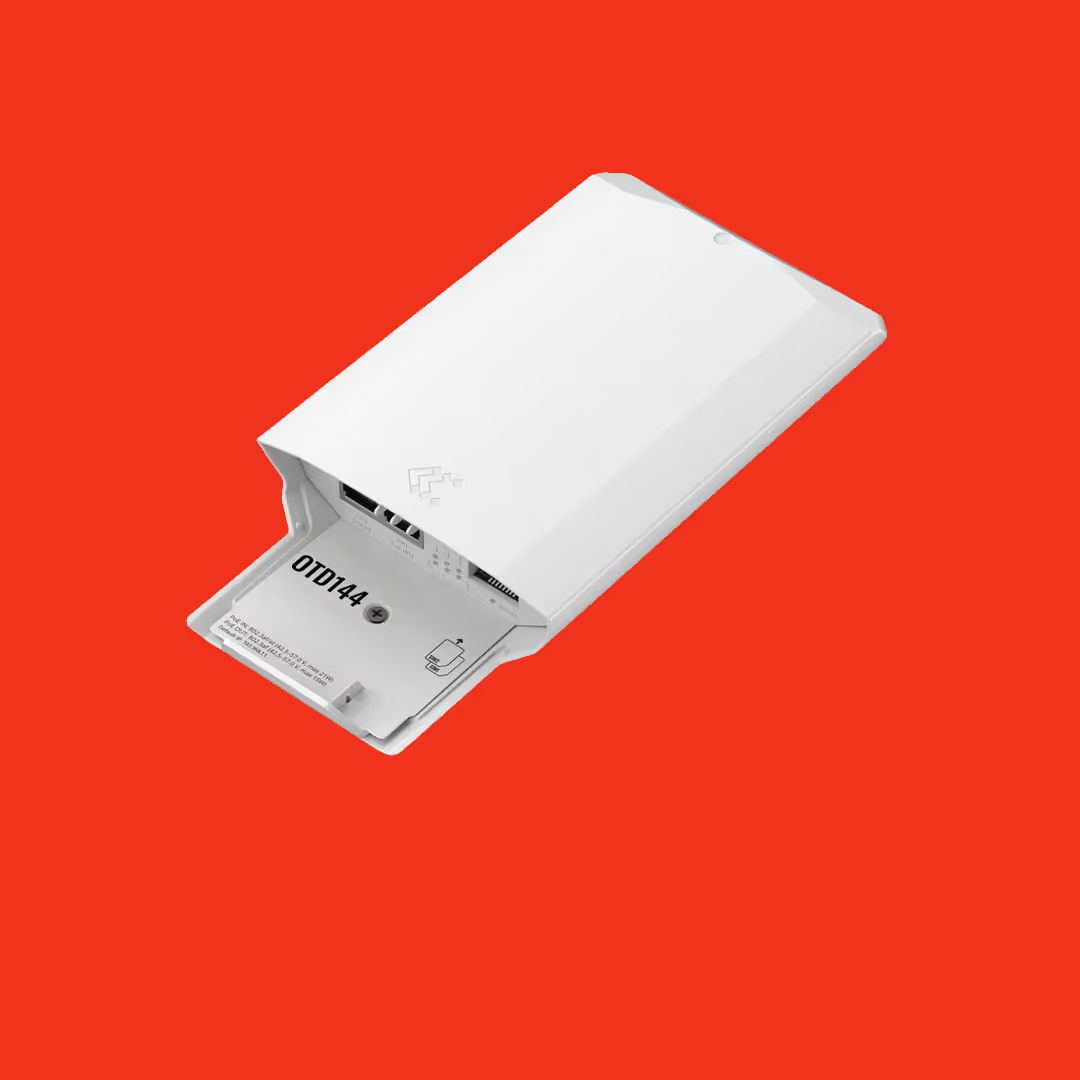
An outdoor gateway approach places the cellular modem close to the antennas, then brings connectivity into the building over Ethernet. In practice, this reduces RF losses associated with long coax runs and simplifies the installation. It also makes it easier to standardise builds across multiple sites.
Millbeck supplies Teltonika outdoor gateway options used for these deployments.
Multi-Site Rollout: Monitoring And Operational Control
Once you move beyond a single site, FWA needs to be supportable. That means visibility into device health, cellular signal indicators, and data consumption, plus a controlled way to apply configuration changes.
Millbeck supports remote monitoring and management for Teltonika devices via RMS (Remote Management System), where appropriate for your environment. This allows teams to manage an estate without visiting every site for routine changes, and it provides a single place to review status across locations.
On the connectivity side, we can supply multi-network IoT SIM options to reduce single-operator dependency, subject to the networks available at each site and the behaviour configured on the SIM profile.
How We De-Risk FWA Before You Commit
If you are considering FWA as a primary link, the quickest route to a sound decision is a short technical discovery. We keep it practical and focused on what will affect outcomes.
We typically cover:
- Site address and install constraints (mounting points, power, cable routes, comms room location)
- Application profile (video calls, cloud workloads, guest access, large transfers)
- Expected resilience requirements (single link, dual SIM, diverse access methods)
- Preferred architecture (indoor router plus antennas, or outdoor gateway plus Ethernet)
- Management approach for one site or many
You will get a recommended design, plus clear guidance on what will materially improve performance at the site.
Speak To Millbeck About FWA
If you need business connectivity without waiting on fibre lead times, we can help you assess whether FWA is the right fit and specify a design you can support long term.
This is some text inside of a div block.
-min.webp)




.png)












.png)
.png)